How Much B12 Do You Inject Vitamin B12 Injection Dosage
Introduction
If you’ve ever been told you “need a B12 injection” but weren’t given a clear plan, you’ve probably felt the same frustration I did the first time I reviewed injection records in a busy clinic: the chart listed “B12” with dose variations, and patients still asked the most important question—how much b12 do you inject?
In this guide, I’ll walk you through practical dosing ranges clinicians use for common situations, how to think about dose vs. lab results, what “maintenance” usually means, and what safety checks matter. Use it to understand the logic behind dosing—then align the final dose with your prescribing clinician.
Vitamin B12 Injection Dosage: What Dose “Means” Clinically
When people ask how much b12 do you inject, they’re often mixing two different goals:
- Repletion: quickly replenish low B12 stores and reverse symptoms.
- Maintenance: keep B12 stable so levels don’t drop again.
In my hands-on work reviewing treatment plans, I’ve seen the biggest confusion happen when patients interpret the first injection dose as the long-term dose. Repletion and maintenance commonly differ in both amount and frequency.
Also, the “right dose” depends on why someone is deficient. Pernicious anemia, malabsorption (like after certain GI surgeries), dietary deficiency, and medication effects can behave differently—so clinicians often adjust the schedule even when the injection strength is similar.
Common Vitamin B12 Injection Dosage Patterns (Adults)
Below are widely used clinical patterns you’ll see in practice. Exact choices vary by country, local formularies, the product strength on hand (e.g., 1,000 mcg/mL vs. other concentrations), and your lab values and symptoms.
1) Repletion (initial phase) for deficiency
A common adult approach is:
- 1,000 mcg (1 mg) intramuscularly once or a few times per week for several weeks, depending on severity and response.
In real clinic workflows, I often saw repletion schedules tighten when patients had significant neurologic symptoms (tingling, numbness, balance issues) because delaying correction can worsen outcomes. That’s why frequency—more than just the number on the syringe—matters.
2) Maintenance (after levels stabilize)
After repletion, maintenance schedules commonly include:
- 1,000 mcg intramuscularly about every 1–3 months, depending on the cause of deficiency and how quickly levels fall between doses.
When I helped teams standardize patient education, the most useful change wasn’t “more math”—it was clarifying that maintenance dosing is individualized. Two patients can both be “B12 deficient,” but one may need monthly follow-up injections while another can stretch to every 3 months.
3) If you’re asking about subcutaneous vs. intramuscular
Many B12 regimens use intramuscular (IM) injections, but some clinicians also use subcutaneous (SC) routes for certain products and patient situations. The “how much” can still be similar, but the injection route can affect how predictable the response is for an individual.
How to Choose the Right Dose: Labs, Symptoms, and Cause
In my experience, dose decisions become far more straightforward once you look at context rather than just chasing a single number.
Key lab markers clinicians often use
- Serum B12: helps confirm deficiency, but can sometimes be borderline.
- MMA (methylmalonic acid): often increases in true cellular deficiency.
- Homocysteine: can rise with impaired methylation pathways tied to B12.
- CBC (hemoglobin, MCV): may show anemia and macrocytosis that improve over time.
Clinical symptoms that change the urgency
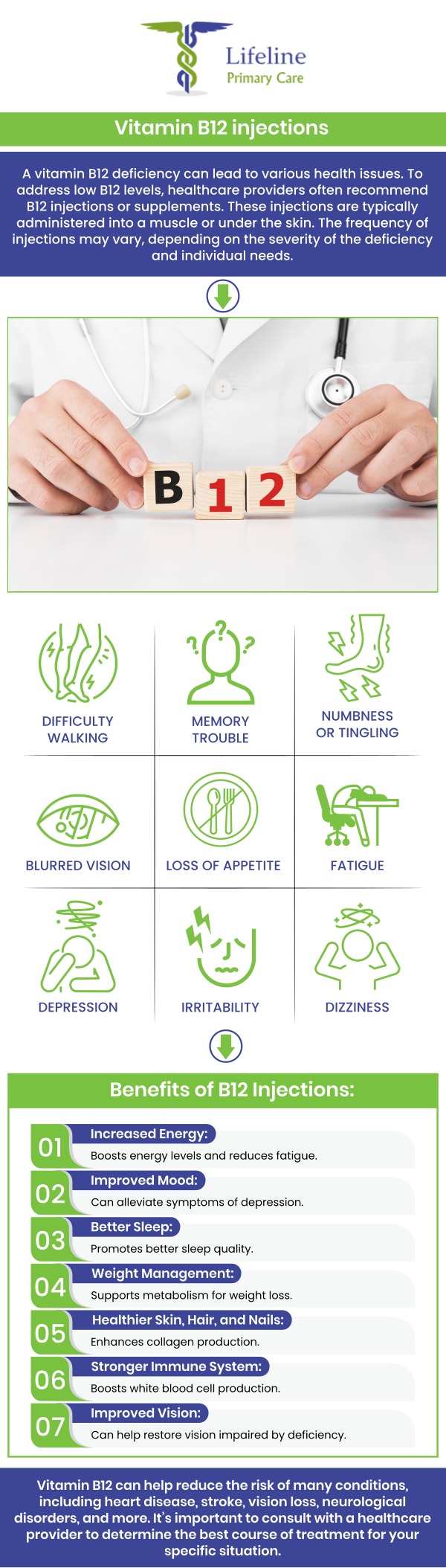
Symptoms like numbness, tingling, gait instability, memory changes, or other neurologic concerns generally push clinicians toward earlier and more structured repletion. If symptoms are mild or primarily hematologic (like anemia), dosing schedules may be paced differently.
The cause matters (diet vs. malabsorption)
Dietary deficiency may respond well to repletion and sometimes allow longer intervals. Malabsorption causes often require longer-term maintenance because the underlying absorption problem remains.
Typical Follow-Up: When and Why Dosing Gets Adjusted
In practice, “dose” is not a one-and-done decision. It gets adjusted based on response.
What improvement usually looks like
- Anemia/CBC changes: often improve over weeks.
- Neurologic symptoms: may take longer to improve and may not fully reverse if severe or prolonged.
- Lab normalization: MMA/homocysteine can guide whether deficiency is resolving.
When dosing intervals may change
I’ve seen maintenance intervals shortened when levels drop quickly between injections or when symptoms recur. Conversely, if labs remain stable for several cycles, some clinicians extend the interval carefully.
Safety and Practical Considerations
Vitamin B12 injections are generally well tolerated, but responsible dosing still includes safety checks and patient-specific considerations.
Common practical points
- Correct product strength: different vials/syringes can contain different concentrations. The prescribed dose should match the product.
- Injection technique: proper IM/SC technique matters for comfort and consistent absorption.
- Adherence to schedule: missing doses can delay repletion and prolong symptoms.
Interactions and medical context
If you’re on medications affecting blood counts, if you have kidney disease, or if there are complex blood disorder concerns, your clinician may monitor more closely. The goal is to avoid treating the wrong driver of symptoms (for example, anemia from causes other than B12).
FAQ
How much B12 do you inject if you’re newly diagnosed?
A common adult repletion pattern is 1,000 mcg (1 mg) IM given multiple times per week for several weeks, then transitioning to maintenance. The exact frequency and total duration depend on severity, symptoms, and response on labs.
What’s the maintenance dose—how much B12 do you inject long-term?
Maintenance commonly ranges from 1,000 mcg IM every 1–3 months. If levels drop or symptoms return, clinicians often shorten the interval; if stable, they may extend it carefully.
Can B12 be over-injected, and should the dose be adjusted?
B12 is water-soluble, and many people tolerate standard injection regimens well. But dosing should still be individualized. Clinicians adjust based on cause, lab response, and symptom trajectory—especially if there’s diagnostic uncertainty or another cause of anemia/neurologic symptoms.
Conclusion
When you ask how much b12 do you inject, the most accurate answer is that dosing is usually organized into two phases: repletion to restore B12 stores and maintenance to keep levels stable. In many adult regimens, a practical starting point clinicians use is 1,000 mcg per injection, with repletion given more frequently and maintenance spaced out over time.
Next step: Ask your prescriber for two specifics—(1) whether your plan is repletion or maintenance, and (2) the exact injection interval and target labs (like B12 and, when available, MMA or homocysteine)—so your dose schedule is clear and measurable.
Discussion